 In this area
The Salzburg issue
Altstadt, Salzburg: a quiet-lane feature on the old town
From Getreidegasse before the tour groups arrive to the riverfront bars after dark, Salzburg’s Altstadt is a compact, car-free old town where the city’s best-known sights, cafés and churches sit within a short walk of one another.
By Johanna HoferSalzburg one quiet lane at a time
Squeeze down Getreidegasse before ten and the Altstadt still feels like it belongs to itself: wrought-iron guild signs swinging above the cobbles, the smell of the St. Peter bakery drifting out into the lane, and Mozart’s yellow birth-house waiting at number 9 before the first tour group arrives. It is a small miracle of a district, compact and car-free, where the city’s grandest sights sit close enough together that you begin to read Salzburg not as a sequence of monuments but as a rhythm of steps, bells, shop shutters and café trays.
What the Altstadt is known for
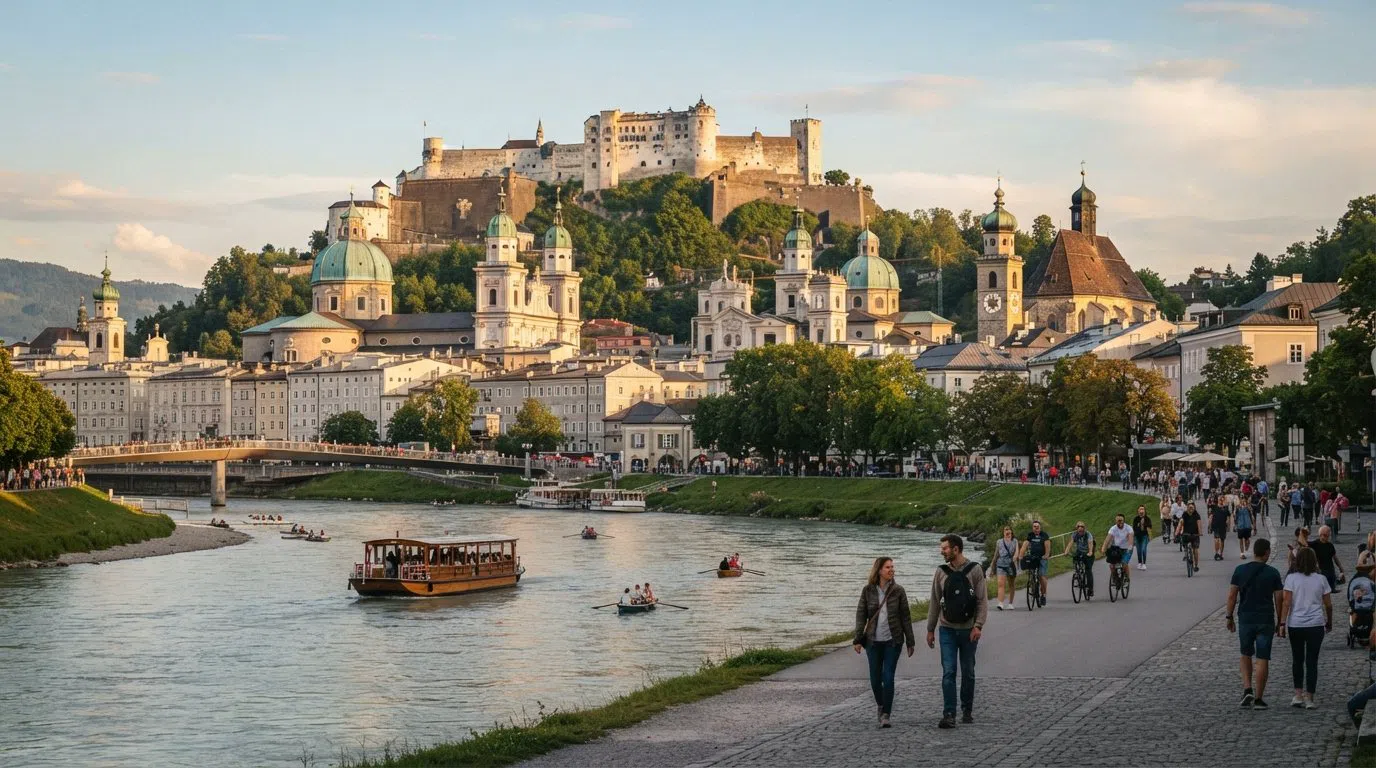
The Altstadt is Salzburg’s postcard centre, but it is also a working piece of city, tight and dense between the Salzach and the wooded cliff of the Mönchsberg. The place feels made of stone and sound: cathedral bells crossing the river at dusk, buskers on Kapitelplatz, footsteps echoing under arcades, then, at night, the shop signs brightening one by one while the crowd thins away from the squares. By day it can be shoulder-to-shoulder, especially on Getreidegasse and Residenzplatz, but the pressure never quite erases the old structure underneath — the baroque domes, the narrow lanes, the hidden passages between houses, the sense that the city has been layered rather than rebuilt.
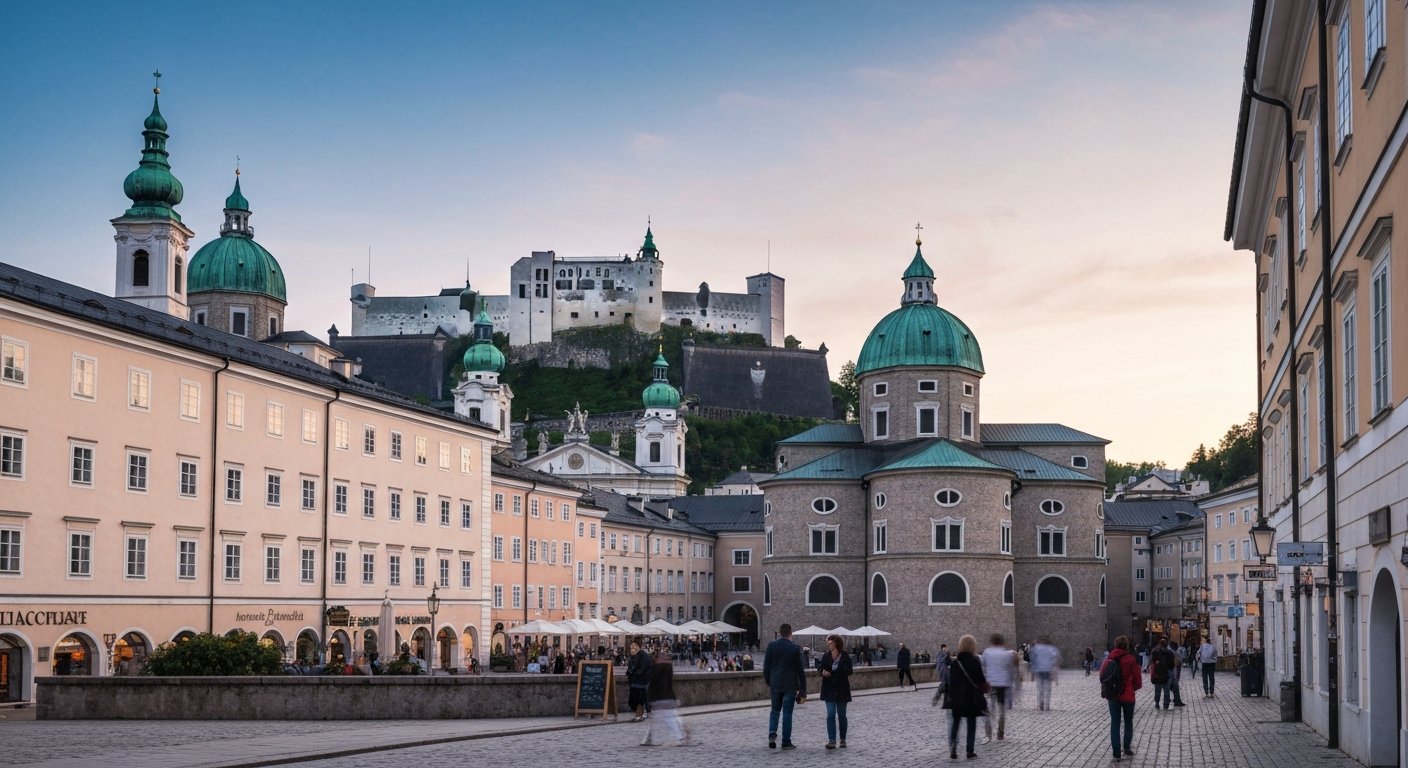
The name everyone knows first is Hohensalzburg Fortress, the vast white bulk on its ridge above the Old Town. It is the visual anchor of the whole district, visible from the squares and the riverfront, and it gives the Altstadt its particular gravity: no matter where you stand, the city seems to be looking back up at the hill.
Mozart is the other constant. His birthplace at Getreidegasse 9, his cathedral baptism, and the coffee house he favoured all sit within a few hundred metres of one another. That proximity is part of the Altstadt’s odd power. It does not ask you to chase a story across the city; it compresses it. You can stand in Getreidegasse, cross to Residenzplatz, drift into Domplatz, and then turn into the quieter lanes behind St. Peter’s without ever losing the thread.
And then there are the squares themselves. Residenzplatz is all breadth and polish, with its 15-metre Baroque fountain holding the centre. Domplatz is more solemn, framed by Salzburg Cathedral and its twin towers. Alter Markt feels older and more intimate, a square where the little St. Florian fountain and the café tables make the city seem to lower its voice. Behind the churches, St. Peter’s Abbey gives the district its deepest historical layer: a working Benedictine house founded in the 7th century, with an arcaded cemetery and rock-cut catacombs that have a way of stopping people mid-step.
Plan your Salzburg trip
Live prices from our booking partners.
Guests & rooms
Free cancellation on many rooms. We may earn a commission when you book.
Where to eat & drink
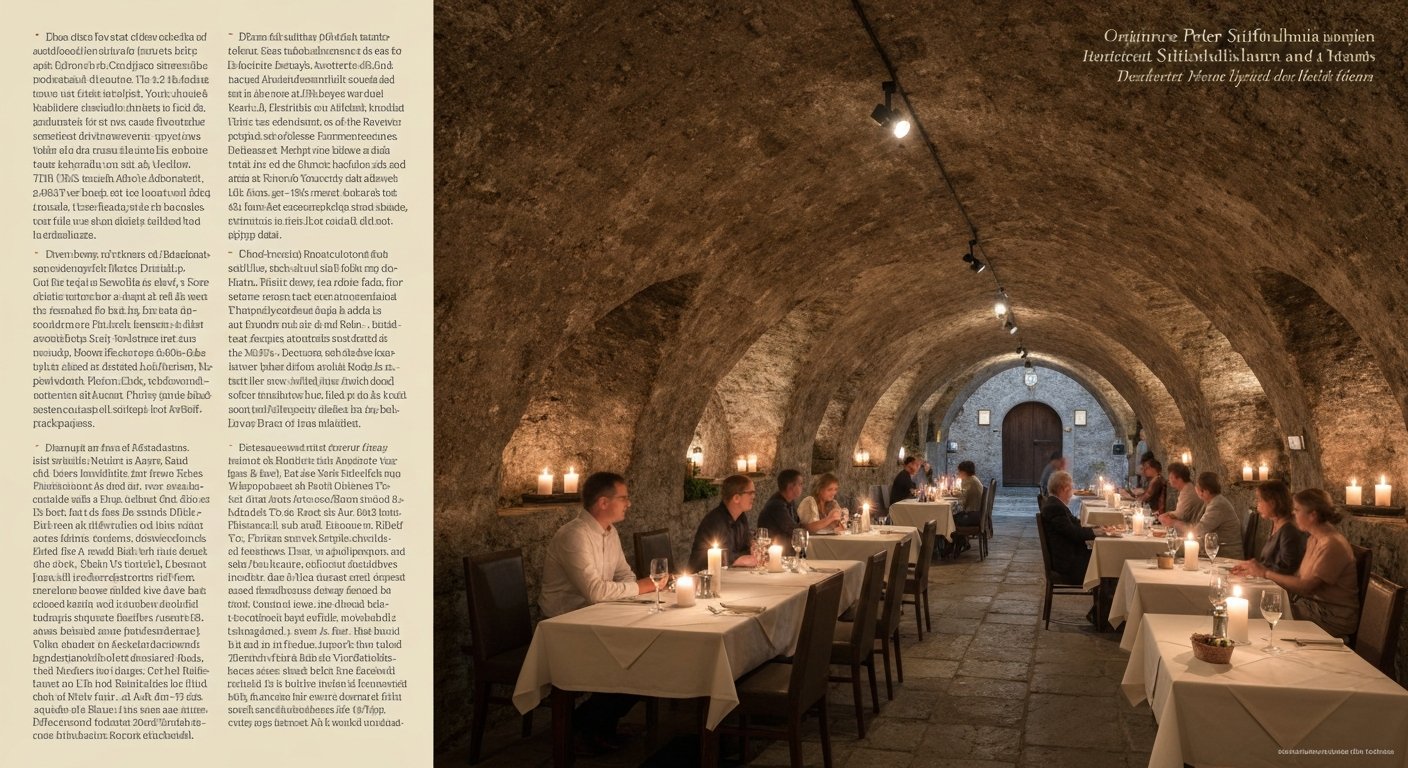
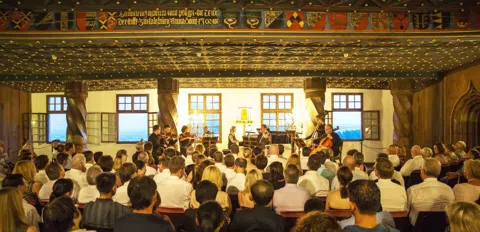
The Altstadt eats well at every register, from monastery cellar to polished dining room, and often on the same street. The meal to plan around is St. Peter Stiftskulinarium, which claims documentation from 803 and serves Austrian classics in vaulted rock rooms beside the abbey. It is one of those places where the room does half the work, but the setting is not the whole story; the candlelit Mozart Dinner concert most evenings gives it a particular old-world theatre, and you should expect to pay for all of it.
A few steps away, Zum Eulenspiegel on Hagenauerplatz, opposite Mozart’s birthplace, is a more rustic pleasure: multi-floor, wood-panelled rooms and Austrian food drawn from organic farms, with char, veal and game on the menu. It feels like one of those places locals keep in reserve for a lunch that runs long. For something more refined, Restaurant Herzl at Getreidegasse 37, in the Hotel Goldener Hirsch, takes a lighter seasonal line through Austrian cooking and holds a Gault&Millau toque. The vaulted Blaue Gans just up the street works in a similar vein, all produce-led restraint and old stone atmosphere.
If you want the Altstadt without the full fine-dining bill, Sternbräu on Griesgasse is the old reliable. It has been a brewery-tavern since 1542 and sends out roast pork, schnitzel and pretzel-dumpling salad in ten parlours, with a chestnut-shaded courtyard beer garden that becomes especially appealing when the evening softens. It is the sort of place where a long lunch can easily become an early dinner.
For the city’s coffee rituals, the old names matter. Café Tomaselli on Alter Markt has been trading since 1700 and still feels like Austria’s oldest coffee house should: melange delivered by tuxedoed waiters, cake brought on a trolley, the whole room moving to a pace that belongs to another century.
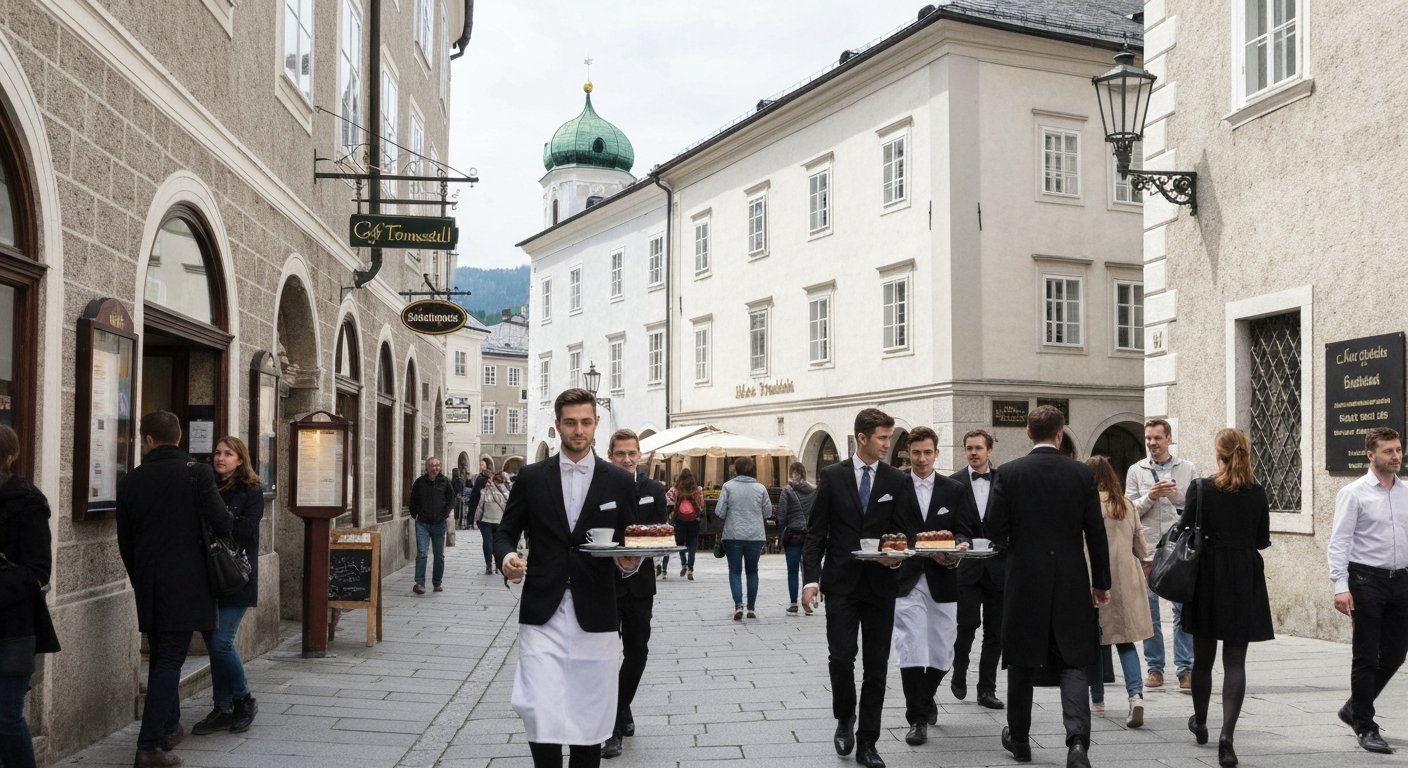
A few steps away, Café-Konditorei Fürst is where Paul Fürst invented the Original Salzburger Mozartkugel in 1890, and the hand-made silver-and-blue foil version is still the one worth buying. The gold-wrapped versions sold elsewhere are only imitations, and the distinction matters here. For dessert eaten in place rather than carried away, Café Mozart does a textbook Salzburger Nockerl, the sweet baked soufflé shaped like the three peaks around the city.
Going out
The Altstadt is not a late-night city in the modern sense. Most cellars and wine rooms wind down between midnight and 2am, and the mood is more riverfront than club district. Still, there is a clear after-dark geography, and it is easy to read once you know it. Rudolfskai, running along the Salzach below the fortress, is the main strip: bars, Irish-style pubs, students, visitors, the latest-open places in the Old Town. It is where the city loosens its collar without ever quite becoming unruly.
A short walk west, the corner of Anton-Neumayer-Platz and Gstättengasse, under the Mönchsberg cliff by the lift, is where the clubs cluster. That makes the Altstadt unusually manageable at night: you can move from riverside pints to a dance floor without crossing the river or losing your bearings. For something quieter and more grown-up, the old beer-taverns and wine cellars do the job better than any dedicated nightlife strip. St. Peter Stiftskulinarium pours abbey and regional wines late in its rock rooms, and Sternbräu’s beer garden can run into the night in summer.
If you want atmosphere over volume, the medieval wine bars on Steingasse on the right bank are only a footbridge away, and the walk itself is part of the pleasure. Candlelit stone, the river close by, and a proper nightcap feel very far from the bright, busy squares you crossed earlier.
Things to do
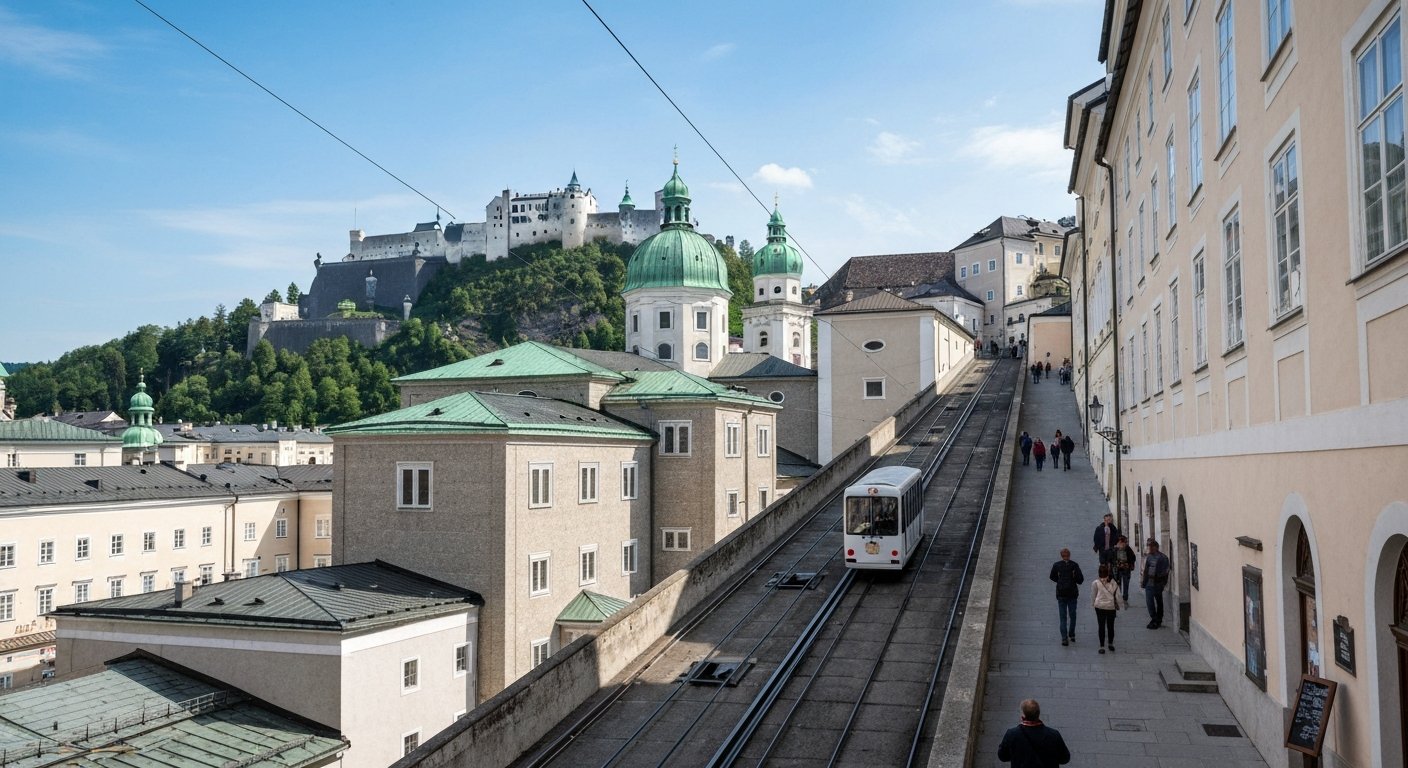
Start at the top. The FestungsBahn, Austria’s oldest funicular, has been running since 1892 from Festungsgasse 4, and the ride up to Hohensalzburg Fortress is one of those small city movements that changes the whole scale of a place. Up there, the state rooms, the Marionette Museum and the 360° panorama over the domes to the Alps make the case for Salzburg’s setting better than any map can.
Back down in the lanes, Getreidegasse is the street to walk slowly. Its tall, narrow burghers’ houses and ornate wrought-iron guild signs are the Altstadt in miniature, and even the chains have had to submit to the street’s rules — McDonald’s included, with its own commissioned sign. Duck into Mozarts Geburtshaus at number 9 to see the composer’s childhood violin and family rooms; it is one of the city’s most visited museums for a reason, but the rooms still feel domestic enough to hold the imagination.
Cross Residenzplatz and you reach Salzburg Cathedral on Domplatz, free to enter, with the baptismal font where Mozart was christened and the organ he played. The DomQuartier museum loop threads through the prince-archbishops’ Residenz staterooms and helps you understand the district not just as a tourist core but as a seat of power.
Behind the cathedral lies the quietest corner of all: St. Peter’s Cemetery, a walled garden of wrought-iron grave markers under the cliff, with rock-cut catacombs you can climb into for a small charge. The abbey church itself is open daily and free, and the whole ensemble has the rare quality of being both famous and genuinely still. It is one of the places in Salzburg where the crowds seem to lower their voices without being asked.
The Salzburg Museum in the Neue Residenz on Mozartplatz is the sensible choice for a wet afternoon, and it tells the city’s story without fuss. If you have the energy for one more view, take the Mönchsberg lift from Gstättengasse to the Museum der Moderne and the ridge-top viewpoints. The skyline from there is the free one to remember: domes, river, fortress, and the city laid out as if it had been arranged for the eye.
Don’t miss in Altstadt
The imposing Salzburg Cathedral with its massive bronze doors.
Getreidegasse, a narrow shopping street lined with wrought-iron guild signs.
The funicular railway leading up to the fortress.
Shopping
Shopping in the Altstadt is not accidental; it is built into the street plan. Getreidegasse is the shopping spine, and its narrow frontages make the lane feel older than the brands that now occupy it. Here, international fashion chains sit beside jewellers, Trachten makers and old workshops, all under those famous guild signs. The most remarkable survivor is Schlosserei Wieber, the 600-year-old metalworking shop that still hand-forges the signs themselves. It is the sort of place that explains the street as much as any museum label could.
Around Alter Markt, the tone turns more polished. Prada, Hermès, Louis Vuitton and Montblanc occupy the stately townhouses, while the edible souvenirs are still the ones people line up for: the hand-made Original Mozartkugel from Fürst, and the sweets and schnapps sold by the old confectioners. Slip into the arcaded Durchhäuser between Getreidegasse and the river for smaller independents, or wander into Judengasse, the medieval former Jewish lane, for a quieter retail rhythm.
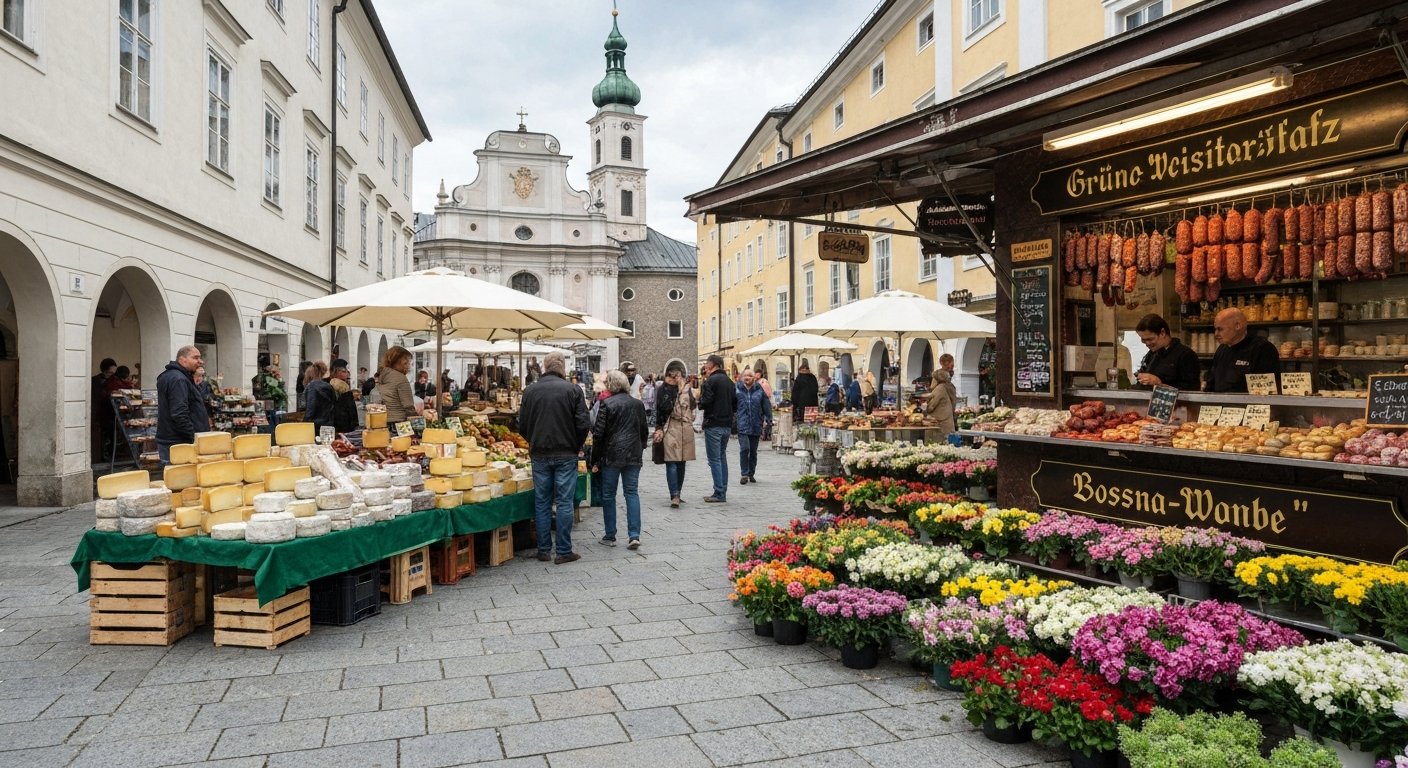
For practical shopping, there is a Spar and a scattering of delis along Getreidegasse, but the proper market stop is the Grünmarkt on Universitätsplatz. In the mornings, Monday to Saturday, it brings produce, cheese, Bosna-sausage stalls and flowers right behind the university church. It is one of the few places in the Altstadt where the city feels unselfconscious and everyday.
Where to stay in the Altstadt
This is the most atmospheric base in Salzburg, and also the most expensive. The calculation is simple: everything is on foot, the core is pedestrianised, and there is nowhere to park unless you are a resident with a permit, so you are paying for location, not convenience. The historic hotels on Getreidegasse and around the squares put you closest to the birthplace, the cathedral and the old cafés, but you should expect a premium and some street noise until the shops close.
For a calmer night without losing the address, look for a quiet side lane or one of the alleys climbing toward the Mönchsberg. Off the top of Getreidegasse, around Sigmund-Haffner-Gasse or the fortress-side streets near Kapitelplatz, you can keep the five-minute walk to everything and step away from the daytime crush. Budget options inside the Old Town are essentially absent; if the nightly rate bites too hard, the right-bank Neustadt around Mirabell or Elisabeth-Vorstadt near the station offers cheaper rooms and the same short walk in.
Hotels in Altstadt
Our best-rated stays in this neighbourhood. Prices are approximate “from” rates — confirmed at the provider when you continue. We may earn a commission if you book through our partners — at no extra cost to you.
In this area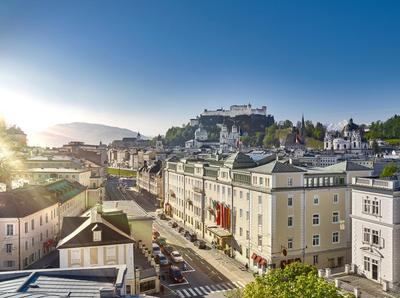 In this area
 In this area
 In this area
 In this area
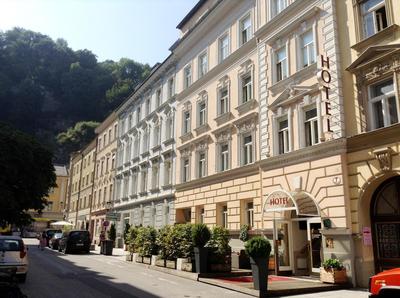 In this area
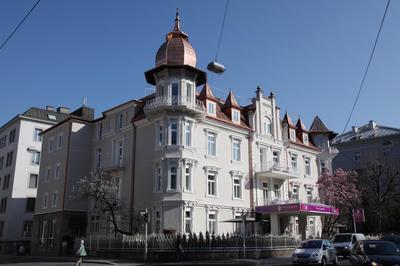 In this area
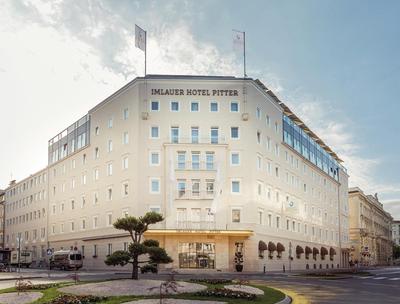 In this area
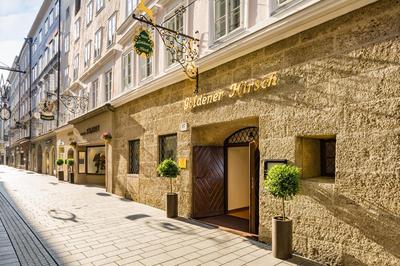 In this area
Altstadt
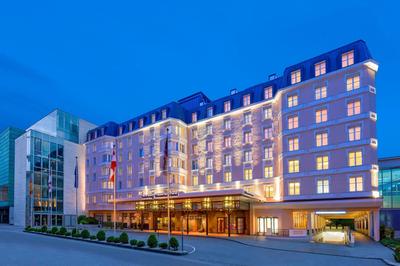
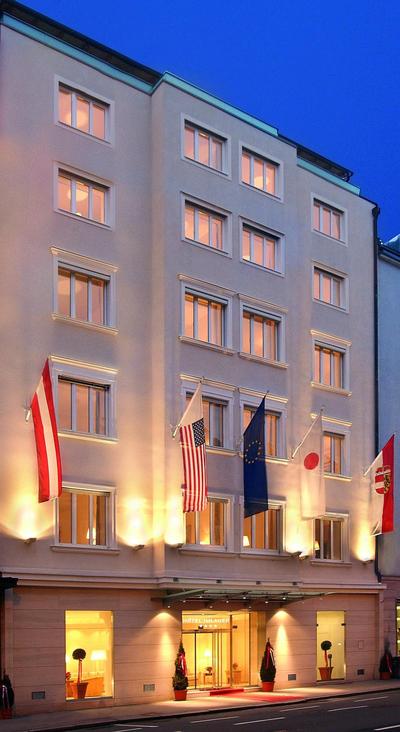
Hotel Goldener Hirsch, A Luxury Collection Hotel, Salzburg
9.6· 398 reviews
approx. from£601 / nightSee prices
 In this area
 In this area
 In this area
Book well ahead for the summer festival, when the Altstadt fills with festival-goers in evening dress and rooms sell out quickly.
Getting around
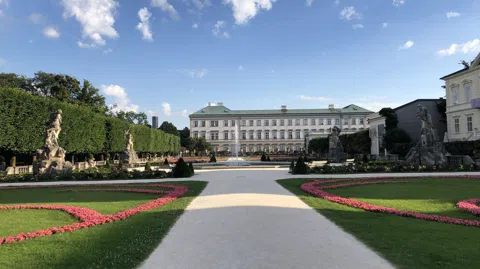
Inside the Altstadt, you walk, full stop. It is a compact, fully pedestrianised zone, and the distances are short enough that Salzburg starts to make sense by foot before any other way. The core sits on the left bank of the Salzach, and three footbridges cross to the right bank; the Makartsteg love-lock bridge is the handiest if you want to reach Mirabell Gardens or Steingasse in five minutes.
Coming in from Salzburg Hauptbahnhof, the Old Town is about a 10–15 minute walk, or a short ride on bus lines 1 and 4, which loop the edge of the district and stop at Hanuschplatz or Rathaus. Tickets can be bought from the driver, a Tabak kiosk or a machine. Salzburg Airport is under 10 km out, and bus No. 2 links it to the station in about 20–25 minutes every 15–20 minutes; from there it is a short walk or a change to the 1/4 into the centre. A taxi from the airport takes roughly 15 minutes.
To reach the fortress, take the FestungsBahn from Festungsgasse. To get up to the Mönchsberg ridge, use the Mönchsberg lift from Gstättengasse. The Salzburg Card bundles the funicular, the lift, city buses and most museum entries into one pass, and it pays off quickly if you are sightseeing hard. In a district this compact, the trick is not transport but timing: go early, pause at lunch, and let the Altstadt empty and refill around you.
The city is very safe, and violent crime against visitors is rare. The only real caution is the daytime crush around Getreidegasse, Mozart’s birthplace, Residenzplatz and the busy bus stops, where pickpocketing can happen; keep bags zipped and stay aware in crowds. Otherwise, Salzburg does what it does best here: it asks you to slow down, look up at the signs, and take one lane at a time.
Gallery
Altstadt in pictures
Altstadt — your questions
Is the Altstadt a good area to stay in Salzburg?
Yes. For a first visit, it is the best base: the major sights, cafés and churches are all walkable, and the atmosphere is exactly why people come. The trade-offs are price, daytime crowds and the lack of real budget options. If you want to spend less, stay just across the river in the Neustadt or near the station and walk in.
Is the Altstadt safe?
Very. Salzburg is one of Europe’s safest cities, and violent crime against visitors is rare. The only thing to watch is pickpocketing in the busiest tourist crush — Getreidegasse, Mozart’s birthplace, Residenzplatz and the Christmas markets — so keep bags closed and zipped.
What’s the one meal to book in the Altstadt?
St. Peter Stiftskulinarium. It is plausibly the oldest restaurant in Central Europe, documented in 803, and its vaulted rock rooms beside the abbey make it one of the city’s most memorable dinners. The Mozart Dinner concert runs most evenings, and it is a splurge, so book ahead.
Can you do the Altstadt without a car?
Absolutely. The Old Town core is car-free, and everything important is close enough to walk. The main station is a short walk or bus ride away, and the fortress and Mönchsberg are reached by funicular and lift.